
Hadleigh Great Wood: impact of people
Summary of section on Prehistory and Archaeology
Not until the start of the neolithic period, c. 4000 BC, did mankind have any appreciable affect on the physical landscape. Prior to this the area would have been in the near-continuous stretch of forest, termed the wildwood, which developed following the retreat of the glaciers after the last ice age c. 10000 BC.
In pre-neolithic times, man survived by hunting and gathering, living in small family groups and having little or no effect on the environment. Evidence of man’s existence is provided by the remains of small flint tools. None has been recovered from the Great Wood, but a mesolithic flake has been found in a garden nearby.
During the neolithic period, which lasted until the introduction of metal tools from
Europe c. 2400 BC, clearance of the wildwood for farming was begun. However, no artefacts from this period are known from the Great Wood, but a possible neolithic hammerstone has been found in the Woods to the east (K. Crowe.)
During the Iron Age and Roman times, to as late as c. 500 AD. the landscape of the Rochford Peninsular was greatly altered leaving an intact core of woodland including Hockley Woods to the north and the Great Wood to the south. Once again, no artefacts from this period have been found in the Reserve. The first lasting evidence we have of man’s intervention is in the place names of settlements linked by the road that still follows the crest of the Rayleigh Hills.
Leah is the Anglo-Saxon word meaning a clearing, and we find the local names Leigh, Hadleigh, Thundersley, Wheatley, Rayleigh and Hockley showing that the woodland was being cleared and settled perhaps as early as the 6th and 7th centuries AD.
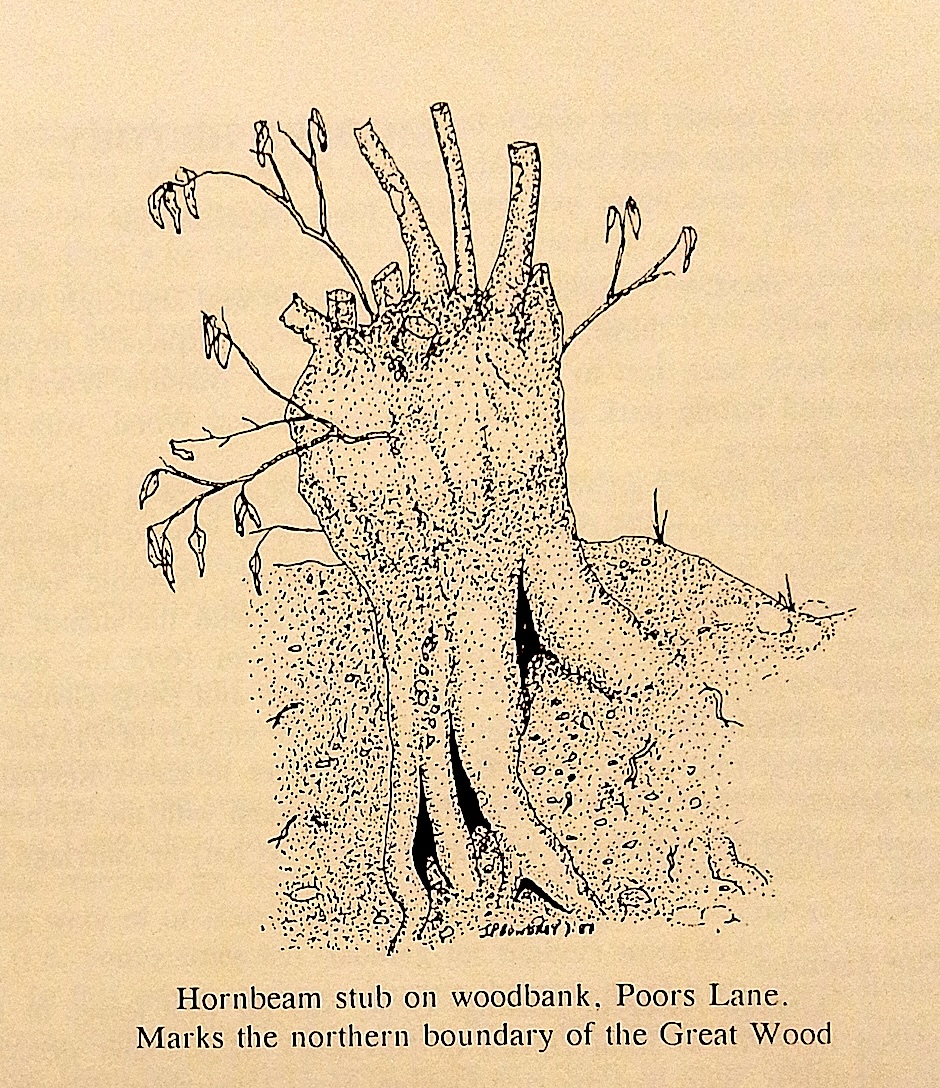
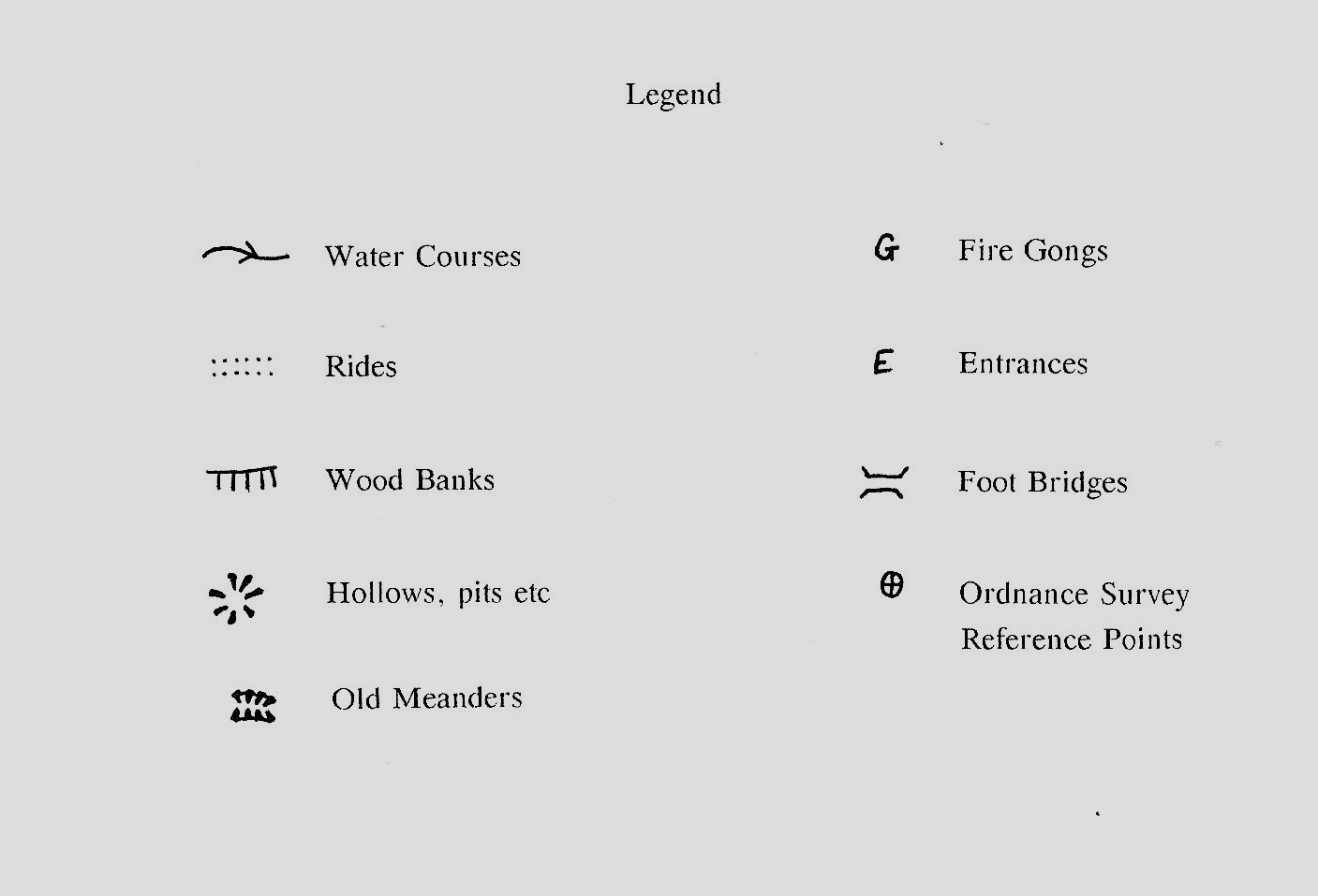
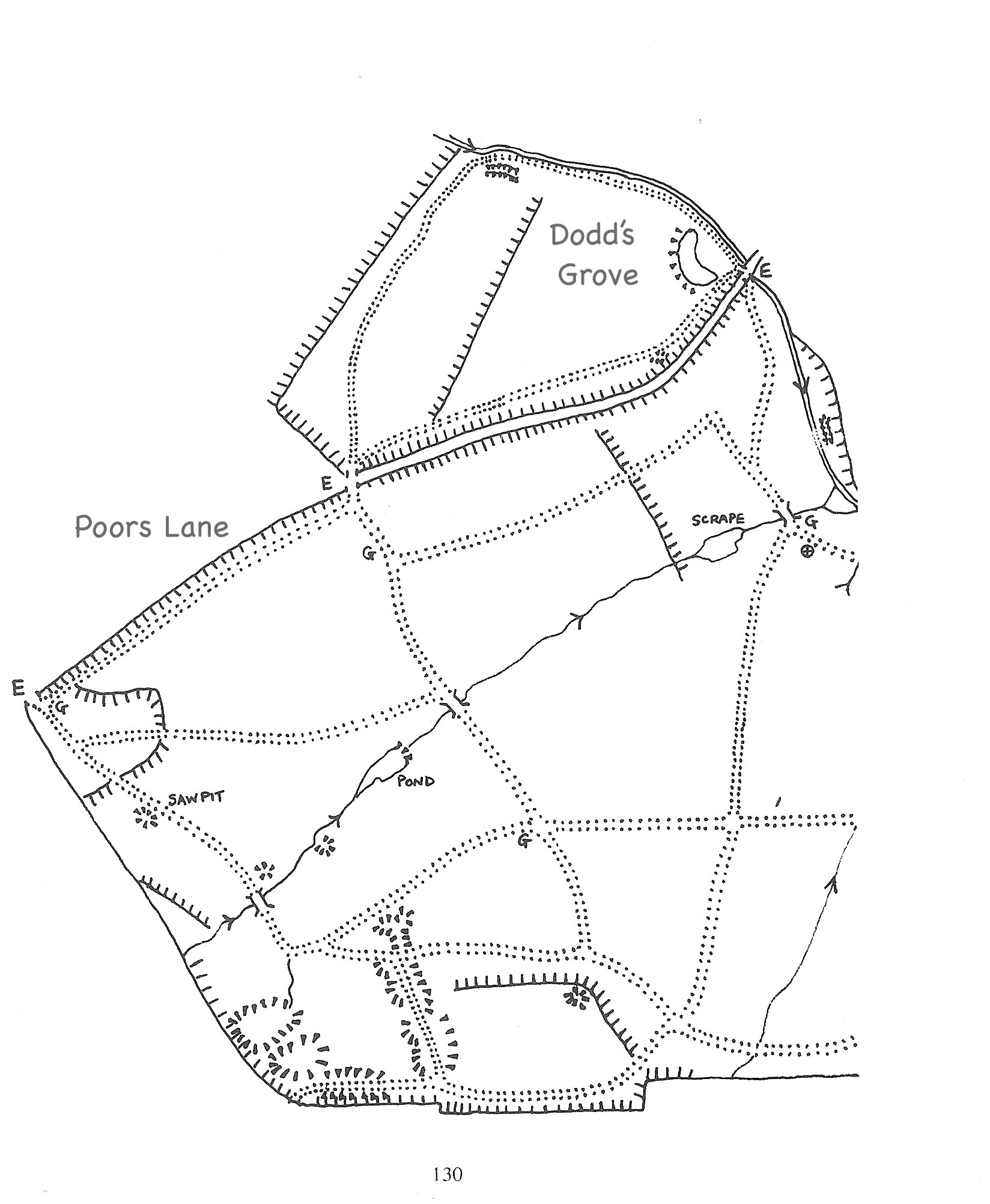
A detailed treatment of the history and construction of woodbanks is given by Rackham (1986) and those visible in the Reserve are shown on the accompanying map. Four phases in the construction of woodbanks were recognised by Rackham, and banks from at least the first three of these phases have been identified in the Great Wood and Dodd’s Grove. The earliest phase is represented by the internal bank in Dodd’s Grove and by weak banks in the Great Wood, whereas the massive embankments delimiting the original boundaries of the Great Wood and Dodd’s Grove along Poors Lane, as well as other internal banks in the Great Wood, are of phase two construction. The straight bank forming the north-western boundary of Dodd’s Grove is attributed by Rackham to period three, and was probably constructed in late Medieval times.
No Comments
Add a comment about this page