


Major Heather Poxon, is the Salvation Army’s Territorial Environmental Officer and is based at their headquarters in London. This article first appeared ‘The Officer’ magazine in the autumn 2025 issue. I am grateful for her permission to publish this article . (Ed)
Wild about re-wilding
Hadleigh Farm Estate seeks to plough new furrows
Major Heather Poxon, Territorial Environmental Officer
Ancient and modern
Captain Wendy Watkins, Emerging Mission Officer, Hadleigh Farm, will speak to anyone who is willing to listen about an exciting range of plans and projects that are taking place in the corner of Essex to which she is appointed. The Salvation Army’s work in Hadleigh Farm stretches all the way back to the days of William Booth, who purchased farmlands (which he christened ‘bad lands’ because of their poor environmental quality) with the intention of furthering the Army’s mission amongst the marginalised. Following in his footsteps, the team at Hadleigh are working hard to make sure Salvation Army work in Hadleigh responds well to modern-day realities.
Keeping on track
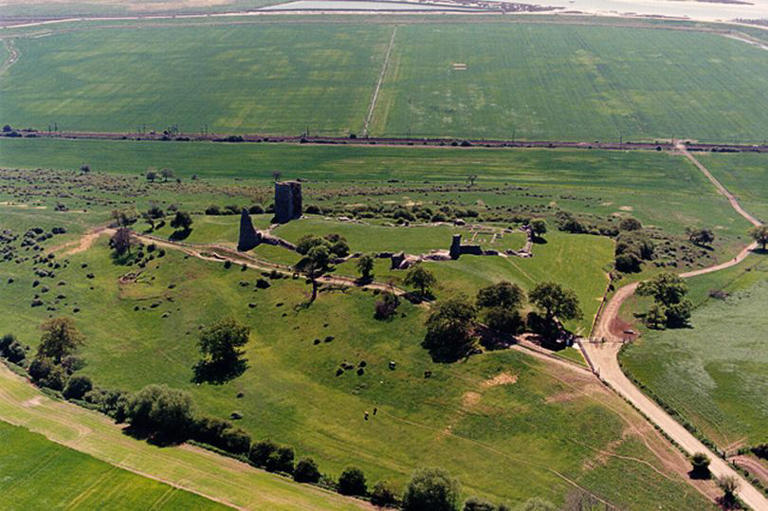
One of the many initiatives taking place is the re-wilding of 640 acres of land that has been exhausted and depleted by decades of farming. Of the 640 acres, a large proportion has gone through a process of arable reversion to create wet marsh habitat, sitting between railway lines and the Thames Estuary, the land has now been protected from any further agricultural practice and become a ‘jubilee’ territory. In the Bible (Leviticus 25:8-38), farmland was periodically rested so as to allow the soil to replenish itself.
The Leviticus principle of responsible stewardship is at work in Hadleigh, and to facilitate the re-wilding of these 640 acres, a system of natural irrigation has now been deployed based on how water moves around the site rather than how ‘we’ want it to. Historically water management has been an issue when trying to keep the arable fields dry the focus has changed to try and keep the area wet. As the land is protected, rested and enabled to flourish as nature intended, it is hoped it will become something of a haven for indigenous plants, insects and wildlife, encouraging a healthy, growing biodiversity.
This objective is not without its challenges, especially given the current dry spell including the driest spring on record, this is something for the team to navigate while responding to the changing story the land is sharing.
History in the making
As the work of The Salvation Army adapts and evolves, with one eye on Booth’s fundamental ethos and the other on contemporary environmental concerns, Hadleigh Castle looks down from its 13th Century base, surveying all that is taking place. In a way, this represents the reality of progress in mission – the Army’s foundations are steadfast and are best honoured by visionary evolution of methodology. The land in question, over-used and spent, is to be restored and allowed to thrive, all for the want of some creative ingenuity. The parallels for wider Salvation Army life are perhaps there to be noted!
No Comments
Add a comment about this page